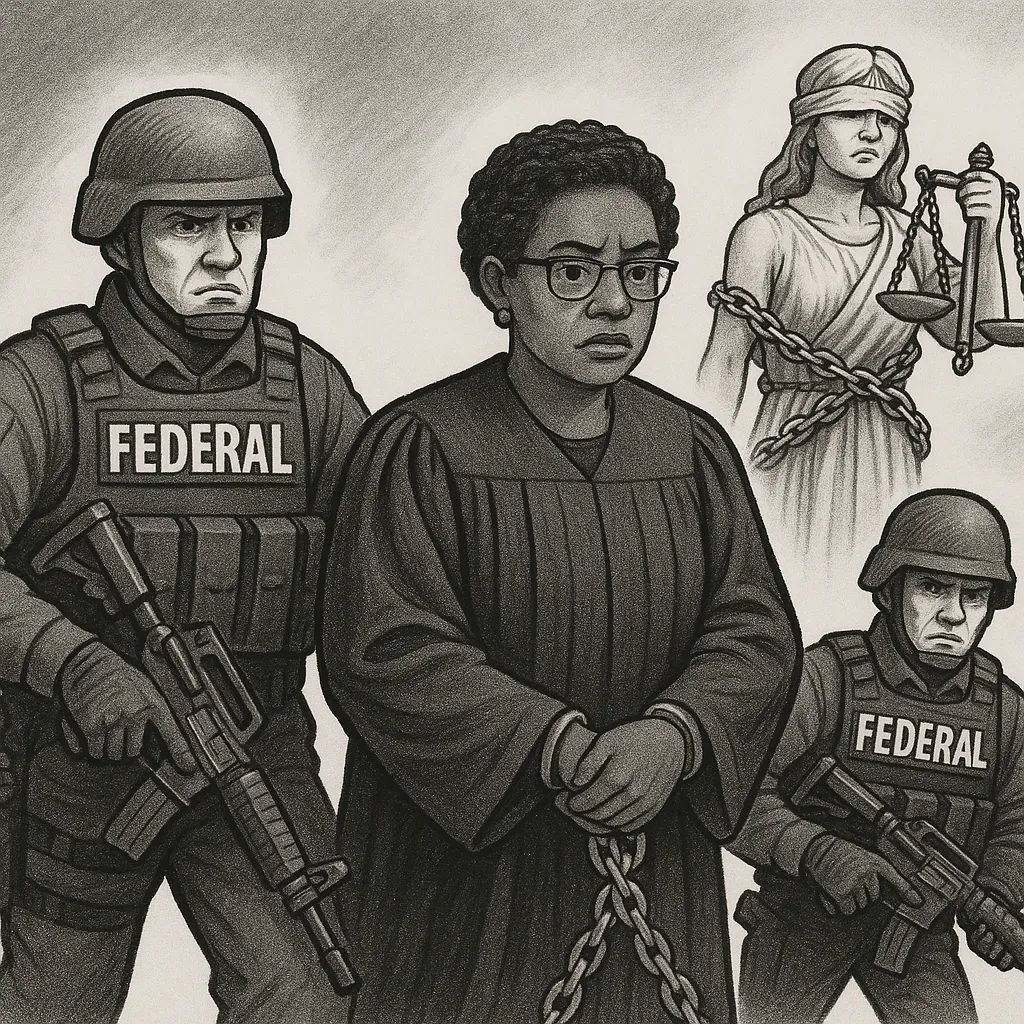
Across America, most arrests occur at private residences, often involving individuals with stable homes, no violent history, and no serious risk of flight. Yet police increasingly launch these arrests with military-style SWAT teams, no-knock raids, and aggressive force, treating suspects as enemies of the state rather than citizens presumed innocent under the law.
FBI data reveal that only about 5% of arrests involve violent crimes. The vast majority of arrests target nonviolent offenses like drug possession, DUI, or petty theft. In Columbus, Cleveland, and Dayton, most arrests are for nonviolent offenses—about 88% in Columbus, over 50% low-level in Dayton, and a large share in Cleveland tied to property crimes—highlighting how policing focuses mainly on nonviolent acts. Most suspects live at known addresses, hold jobs, and pose no active threat to the public. Arrests for nonviolent charges could be handled calmly, through peaceful surrender or negotiated apprehension. Instead, law enforcement chooses violence.
The modern use of SWAT teams exposes the militarized mindset rotting American policing. Originally designed for hostage crises and active shooters, SWAT raids now serve routine search warrants and low-level drug busts. The ACLU found that 80% of SWAT deployments involved searches, not emergencies. Each year, police conduct roughly 50,000 SWAT raids—many smashing into homes where no violence or resistance awaited them.
No-knock raids, a grotesque extension of this aggression, strip civilians of the chance to even answer the door. These unannounced invasions often create the very violence police claim to prevent. Startled homeowners, mistaking police for intruders, have defended themselves with tragic results. Innocent people die, children suffer trauma, and families are ripped apart—often for nothing more than suspected personal drug use. In most fatal no-knock raids, police recovered minimal or no contraband.
Such tactics directly assault the principles of due process and the presumption of innocence. In the American tradition, every citizen deserves to be treated as innocent until proven guilty. Yet militarized raids treat suspects as battlefield combatants to be neutralized. Officers blast into homes with flashbang grenades, battering rams, and automatic weapons, as if civilians were enemy soldiers.
This aggressive approach not only violates constitutional protections; it invites unnecessary bloodshed. SWAT raids have killed dozens of civilians, including bystanders and family members not even suspected of wrongdoing. Police forces, emboldened by federal militarization grants and asset forfeiture incentives, too often escalate force without genuine necessity. Peaceful alternatives—summonses, voluntary surrenders, traditional arrests—are ignored in favor of dramatic shows of power.
Libertarians recognize the dangerous consequences of empowering the state with unchecked force. Policing must have a legitimate purpose: protecting the rights of individuals, not terrorizing the public. The deployment of military tactics against peaceful citizens betrays every principle of limited government and individual liberty.
Ending this abuse requires immediate action. No-knock raids must be strictly limited or abolished. SWAT deployments should be reserved for true emergencies, not routine warrant service. Judges must stop rubber-stamping no-knock warrants based on vague threats. Police departments must retrain officers to de-escalate, not provoke, and to respect the rights of the accused.
The Constitution demands more. Every raid that treats an innocent citizen as an enemy combatant erodes the fragile line between free society and tyranny. If liberty means anything, it must mean the right to live free from arbitrary violence at the hands of government agents. Americans must insist that law enforcement serves the people, not wages war against them.
Libertarian review that highlights books on individual freedom, limited government, free markets, and personal responsibility. It critiques works from diverse genres, promoting independent thought and offering insights into libertarian ideas and their real-world impact.
Robert W. Poole’s Cutting Back City Hall offers a roadmap perfectly aligned with the Libertarian Platform’s vision of reducing government spending, eliminating taxes, and improving the quality of services. Poole demonstrates how local governments have monopolized services that could be better managed through privatization, voluntary efforts, and market-driven solutions. His work shows us how to take back control of essential services, empower communities, and eliminate wasteful government bureaucracy.
Breaking Government Monopolies
One of Poole’s central arguments is that municipal governments maintain monopolies over services like waste collection, public safety, and road maintenance. These monopolies create inefficiencies, drive up costs, and reduce service quality. As Libertarians, we know that competition and market forces outperform government monopolies. By allowing private companies to compete for service contracts, we can introduce innovation, drive down costs, and give residents real choices. Instead of being forced to pay for services that may not meet their needs, individuals and communities can choose providers who deliver better results.
Voluntary Funding and User-Pay Models
Poole advocates replacing tax-funded services with voluntary payments and user-based fees. This approach reflects our core belief that individuals should only pay for services they use, rather than being coerced through taxation. When people pay directly for services—whether through user fees, membership models, or subscriptions—they have an incentive to demand quality and efficiency. We can promote voluntary funding for essential services such as libraries, parks, and road maintenance through community-supported initiatives and user-pay systems.
As an example, replacing property taxes that fund public services with bundled payments on water, electric, and gas bills can make funding more transparent and directly tied to service quality. This not only reduces government intervention but also encourages people to take ownership of the services they value most.
Leveraging Volunteerism and Community Engagement
Poole highlights the potential for volunteer efforts and community organizations to take over many public services. As Libertarians, we recognize the power of civil society to solve problems without government interference. Volunteer fire departments, neighborhood watch programs, and local education initiatives show that communities can thrive when people are empowered to contribute directly. By promoting community-driven solutions, we can reduce dependence on government while strengthening social bonds and civic responsibility.
We can encourage businesses and nonprofits to take an active role in sponsoring and maintaining public spaces, funding education programs, and providing safety initiatives. These voluntary contributions not only reduce the need for taxes but also create a stronger, more engaged community.
Decentralization and Local Control
A core principle of the Libertarian Platform is decentralization, and Poole emphasizes its importance in managing public services. When power is returned to local communities, services become more responsive, innovative, and efficient. By breaking down large, unaccountable bureaucracies and giving communities control over their own resources, we ensure that decision-making reflects the unique needs and desires of those affected.
We can advocate for the dissolution of state-mandated service monopolies and push for local communities to make decisions about how best to provide essential services. Whether through cooperative models, private contractors, or volunteer organizations, local solutions outperform top-down government programs.
Addressing Concerns About Privatization
Critics of privatization often argue that it benefits wealthier communities and leaves others behind. Poole addresses this by demonstrating that market competition drives down costs, making services more affordable for everyone. As Libertarians, we can reinforce this by promoting models that offer tiered pricing, scholarships, and sliding-scale fees to ensure access without relying on government coercion.
Furthermore, opponents claim that voluntary systems will lead to gaps in service. However, history shows that when people see the direct impact of their contributions, giving increases dramatically. Voluntary contributions often surpass coerced taxation in both quantity and effectiveness, as people are more willing to give when they trust where their money is going.
Conclusion
Cutting Back City Hall provides a comprehensive framework for dismantling bloated local governments and replacing them with voluntary, market-driven solutions. Poole’s vision aligns with our Libertarian values of limited government, individual freedom, and personal responsibility. By promoting privatization, voluntary funding, and community-driven initiatives, we can eliminate unnecessary taxes while raising the quality of services provided. As Libertarians, we have an opportunity to apply these principles, empower our communities, and demonstrate that freedom and choice yield better outcomes than government control ever could.
Cutting Back City Hall by Robert W. Poole aligns with Libertarian goals by advocating privatization, voluntary funding, and local control. It shows how reducing government, eliminating taxes, and encouraging community-driven solutions can improve service quality and efficiency.
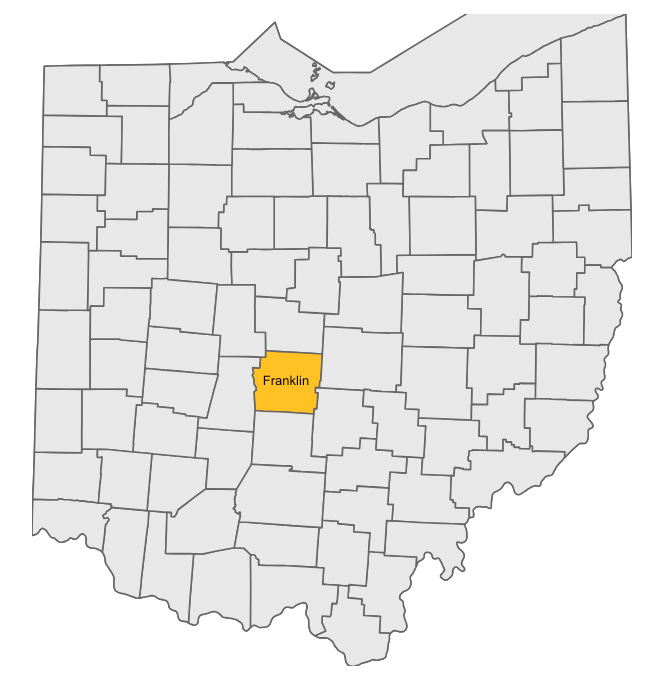
Franklin County needs energetic people to run for office! Libertarian elected officials get to make policy that reduces the scope of government and increases personal liberty.
We encourage first-timers to run for local offices in odd-numbered years. You must file a declaration of candidacy with the Franklin County Board of Elections, with completed petitions containing the number of signatures required for the office you are seeking.
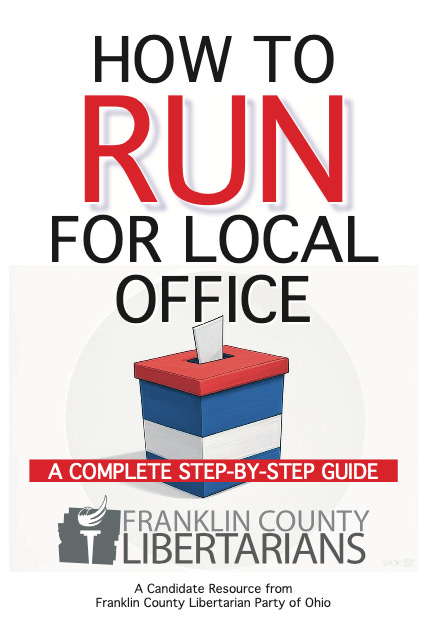
Local offices include city and village council, township trustees, and school board members. With a term or two of local office, you will have the experience and credibility to run a successful campaign for county, state, or federal office, but if you have the qualifications to run for a different office, we won’t turn you down! Before starting your campaign, take a quick look at our “Candidate Quick Start Guide” video (27 minutes) and new “How to Run for Local Election” step-by-step guide.
Franklin County needs energetic people to run for office! Libertarian elected officials get to make policy that reduces the scope of government and increases personal liberty.
We encourage first-timers to run for local offices in odd-numbered years.
Local offices include city and village council, township trustees, and school board members. With a term or two of local office, you will have the experience and credibility to run a successful campaign for county, state, or federal office, but if you have the qualifications to run for a different office, we won’t turn you down! Before starting your campaign, take a quick look at our “Candidate Quick Start Guide” video (21 minutes) and “How to Run for Local Election” step-by-step guide.
Franklin County needs energetic people to run for office! Libertarian elected officials get to make policy that reduces the scope of government and increases personal liberty.
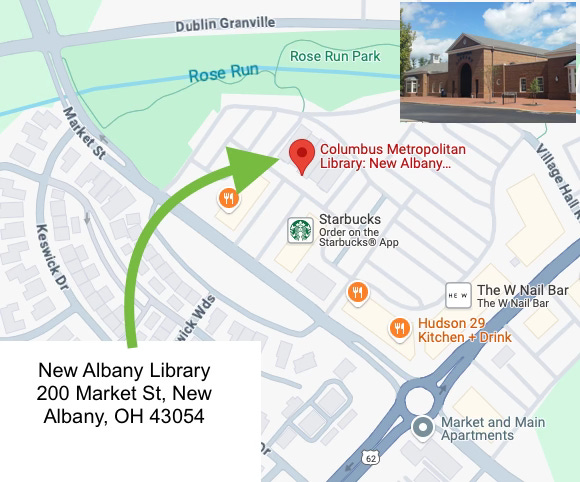
Check out our new Candidate Quick Start video and join us Jan 6th for in-person training! 6:00 pm – 7:30 pm Candidate and Campaign Training New Albany Library – 200 Market St, New Albany pic.twitter.com/eJzHdlnOay
— Franklin County Libertarian Party of Ohio (@FCLPO) December 27, 2024
We encourage first-timers to run for local offices in odd-numbered years. Because the Libertarian Party lacks ballot access in Ohio, candidates running this year will run either for non-partisan offices or as independents. To run, you must file a declaration of candidacy with the Franklin County Board of Elections, with completed petitions containing the number of signatures required for the office you are seeking.
Local offices include city and village council, township trustees, and school board members. With a term or two of local office, you will have the experience and credibility to run a successful campaign for county, state, or federal office, but if you have the qualifications to run for a different office, we won’t turn you down!